Yet many people are unsure what actually happens during an appointment, especially if it has been a while since they last saw a dentist.
Whether you attend regularly or are thinking about booking after a long break, understanding what a dental check-up involves can help you feel more confident and prepared.
A routine dental check-up is a preventive appointment designed to monitor your oral health, identify problems early, and help you avoid more complex treatment in the future. It is not just about checking for cavities—your dentist assesses your entire mouth, including your teeth, gums, jaw, and soft tissues.
Routine check-ups are suitable for patients of all ages. The interval between appointments depends on your individual oral health and risk factors; many people attend every six to twelve months, but your dentist may recommend a different schedule.
Your dentist may ask about:
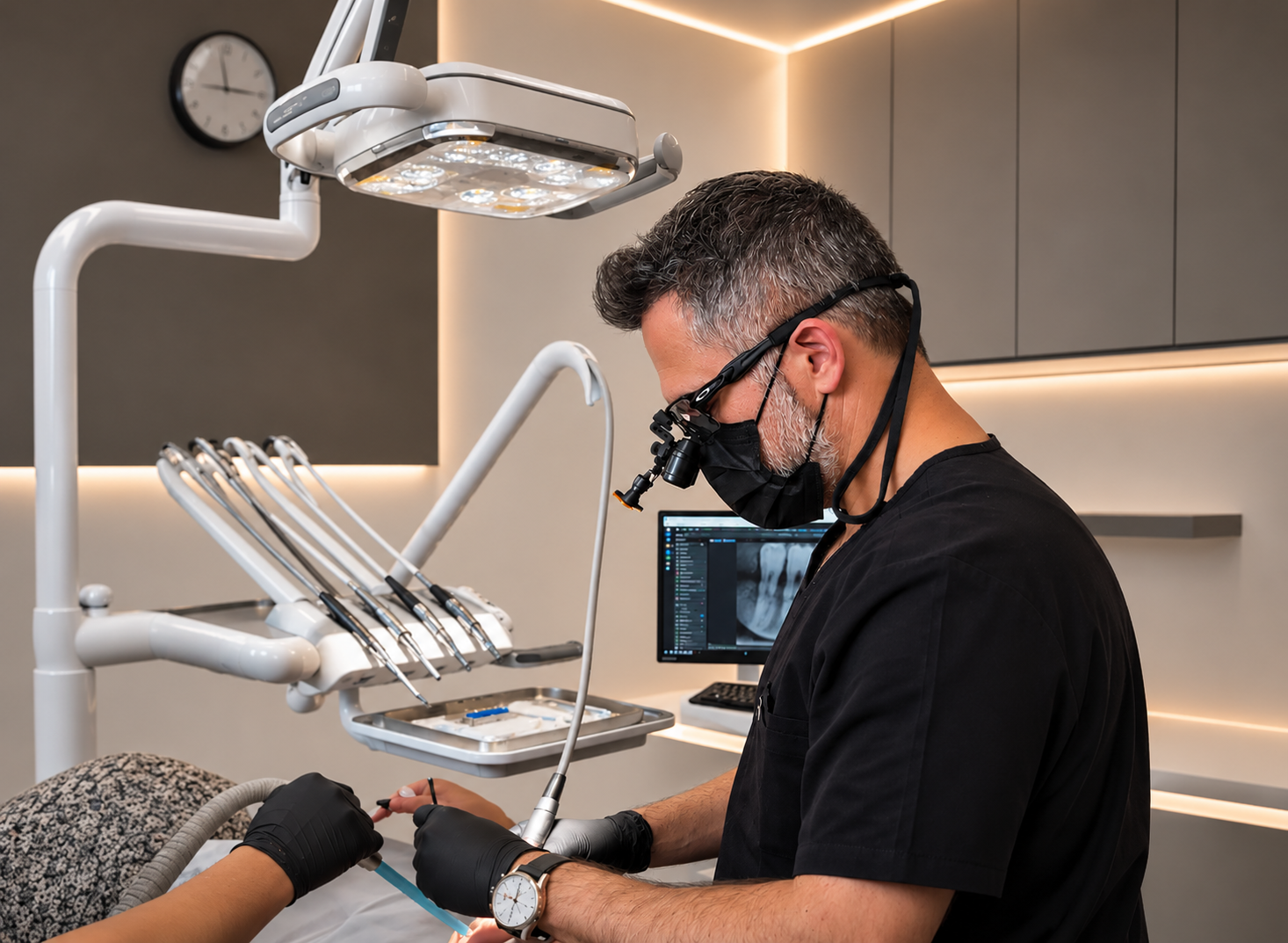
Your dentist will carefully examine each tooth to check for:
The examination uses dental instruments, lighting, and, where appropriate, magnification to help identify early signs of damage. Identifying decay early may mean it can be treated with a simple filling rather than more complex procedures such as root canal treatment or crowns.
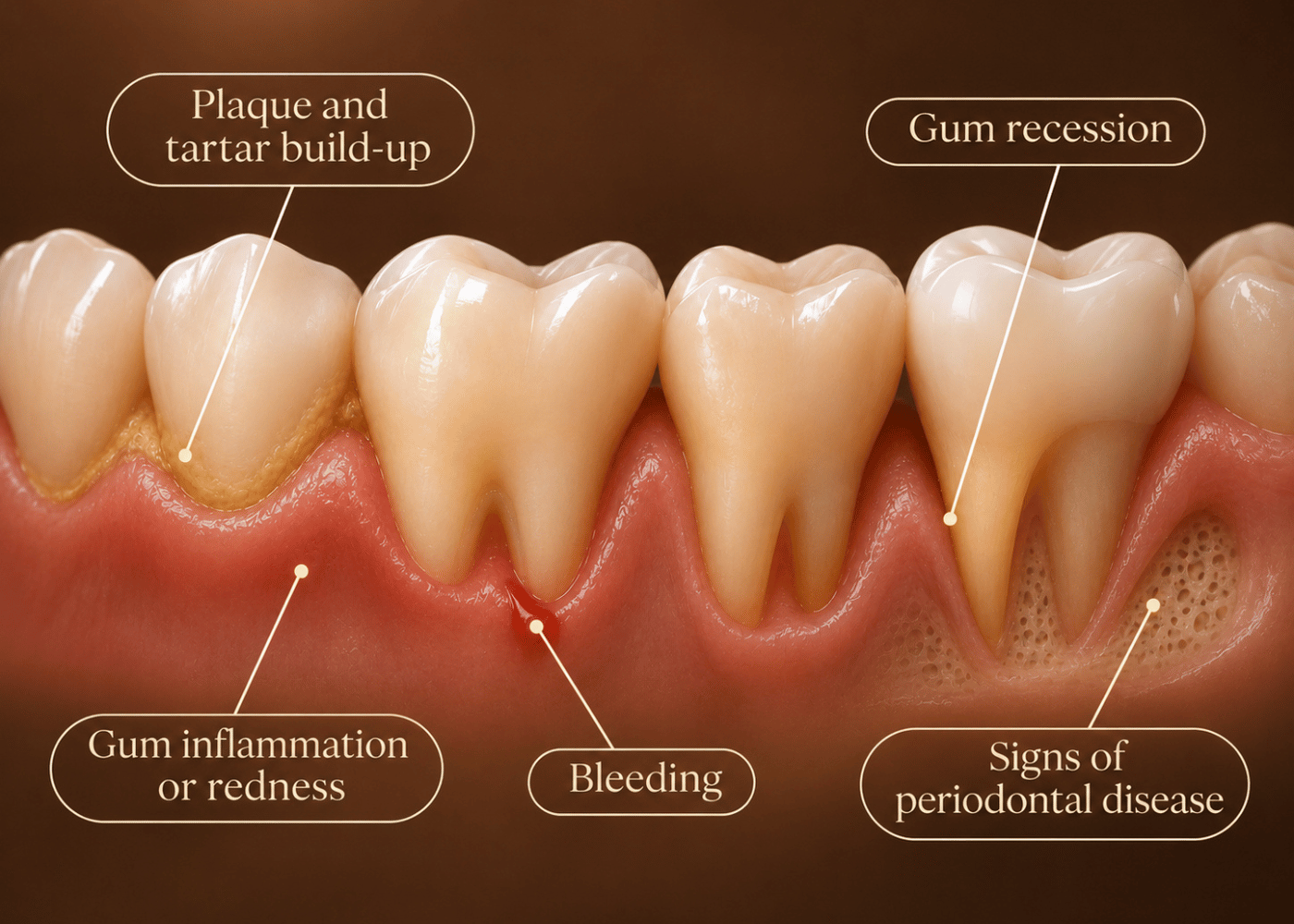
Gum disease is a common cause of tooth loss in adults and can develop without pain. Your dentist will assess:
In some cases, your dentist may measure the depth of the spaces between your teeth and gums to assess gum health more accurately. If early signs of gum disease are detected, management may include improved oral hygiene and regular visits to the dental hygienist.
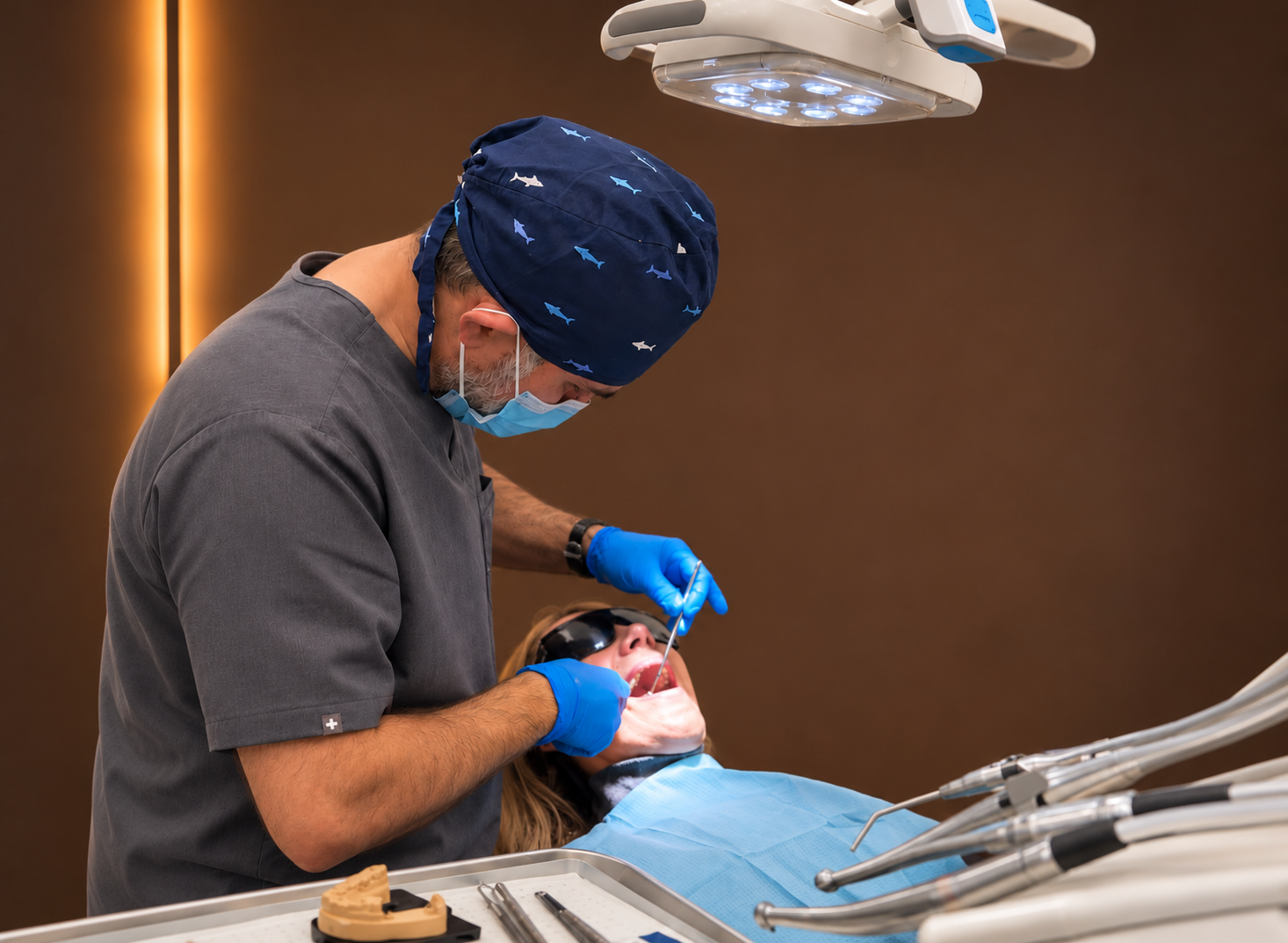
Problems with your bite can contribute to:
Signs of teeth grinding (bruxism) may also be identified. If necessary, your dentist may recommend treatments such as a bite guard or further investigation.

A routine dental check-up may include an examination of the soft tissues in your mouth, including:
Your dentist looks for unusual lumps, sores, colour changes, or swelling. If anything concerning is found, they will explain what further assessment may be needed.
Dental X-rays are not taken at every appointment; they are used when clinically necessary. X-rays help your dentist see issues that are not visible during a visual examination, such as:
Your dentist will recommend X-rays only when they are needed to support diagnosis and treatment planning, taking your individual circumstances into account.
A key part of a routine dental check-up is prevention. Your dentist will provide personalised advice based on your oral health, which may include:
This advice is tailored to help you maintain good oral health between appointments and reduce the risk of future problems.
If any issues are identified during your check-up, your dentist will explain:
You should have the opportunity to ask questions and understand the proposed options before deciding how to proceed.
The recommended frequency varies from person to person. Your dentist will advise how often you should attend based on:
Some patients may need check-ups every six months, while others with stable oral health may be advised to attend less frequently. Follow the interval recommended by your dental professional.
Begin your journey to a healthier, more confident smile. Book a consultation with our trusted team of professionals.
Book a Consultation




